BDM Works for Every Closely Held Business — Here's Why
I get asked this question a lot. "Does BDM work for businesses like mine?"
The answer is almost always yes. And here's why.
The World BDM Is Built For
Family-owned CPA firms and closely held service-based businesses is the world in which BDM is most suited to impact. That's a wide world. It includes a $60 million privately owned construction firm. A $10 million multi-partner CPA firm. An alarm company started by a parent as a solopreneur, now with two children beginning to take over the driver's wheel, who wants to retire and still needs to draw a salary, yet is unsure if the business can continue into the future.
It includes the IT cybersecurity contractor who started off three years ago as a side hustle and now has a team of eighteen. The plumbing and heating contractor who has grown from one to three million dollars and is continuing to grow but can't seem to find the time to get away for quality family time.
What These Businesses Have in Common
Different industries. Different sizes. Different stages of the journey. But the same core challenges.
They've grown beyond the point where the founder's instincts alone can manage the business. They have good industry-related skills but lack the tools to plan, forecast, make realistic budgets, and measure KPIs. They feel the nagging sense that the business could be generating more money — if only they had a better grasp of where the possibilities lie.
Why the BDM Approach Works Across All of Them
Because the Throughput Process is not industry-specific. It's business-specific. The standard operating procedures, the statistical process analysis, the closed-loop system, the predetermined profits — these principles apply to any business that has people, product, and process.
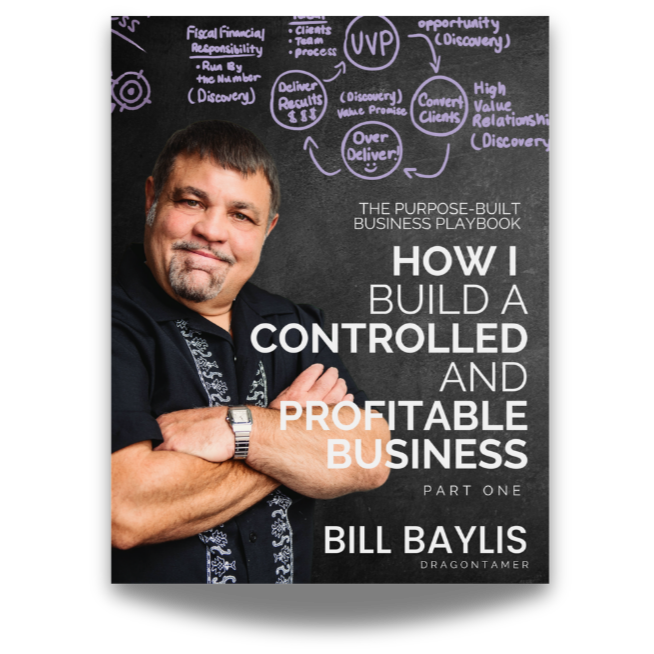
Download The Purpose-Built Playbook and learn how the BDM approach has helped closely held businesses of every size and industry build controlled, optimized, and highly profitable operations.